

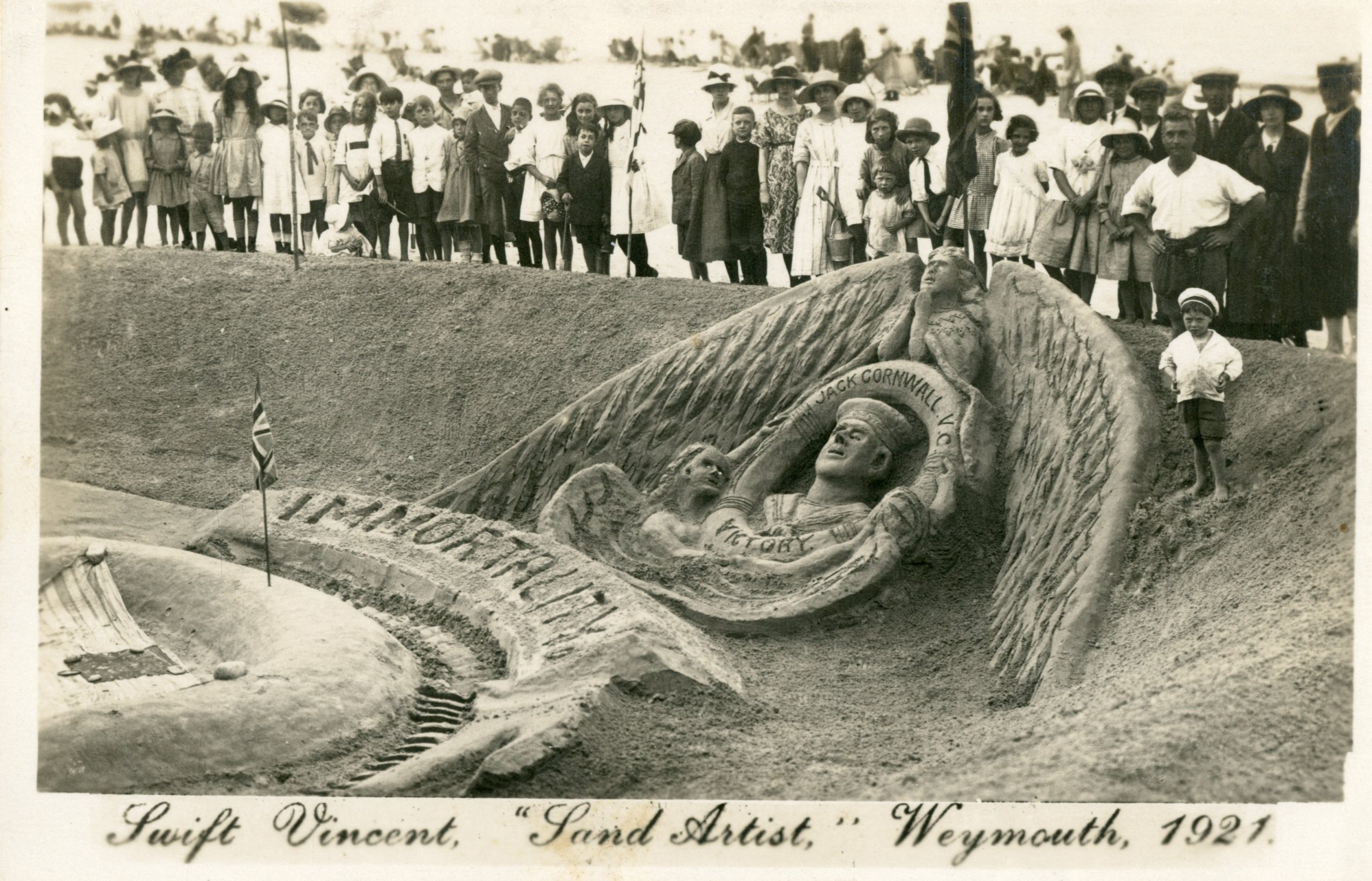
This picture shows a wonderfully elaborate sand sculpture at Weymouth commemorating Jack Cornwell, V.C., although the inscription reads “Cornwall.”
The photo was taken in 1921, when acts of bravery from the First World War were still fresh in the public’s eye.
Jack Cornwell (1900-1916) was born in Leyton and in 1915 enlisted in the Royal Navy without his father’s permission. At the Battle of Jutland he was a member of the crew of H.M.S. Chester which came under intense fire from four German cruisers. All the crew of the gun where he was serving as a sight setter were killed or mortally injured and Cornwell who was severely wounded remained at his post for more than 15 minutes. The sole survivor of his gun crew, medics found him at his post waiting for orders, although shards of steel had penetrated his chest. H.M.S. Chester was incapable of further action and was ordered to the post of Immingham. Cornwell was transferred to Grimsby General Hospital although he was clearly dying. He died on the morning of 2 June 1916 before his mother could arrive at the hospital. In November 1916 his mother received the Victoria Cross from King George V.
He was buried initially in a common grave in Manor Park Cemetery in London but was later reburied with full Military Honours in the same cemetery. One hundred years later the grave was given Grade ll Listed Status.
The original furore over his reburial led to over 7 million of the Empire’s children donating to his fund which raised £18000 for the Jack Cornwell ward of the Royal Star and Garter Home at Richmond. Another memorial fund led to a community of cottage homes being built at Hornchurch for needy, disabled or infirm former sailors and Royal Marines up to the rank of Warrant Officer and their families. The Boy Scouts Association created an award for participants in respect of pre-eminently high character and devotion to duty, together with great courage and endurance. He is remembered in many other ways worldwide.